About this course
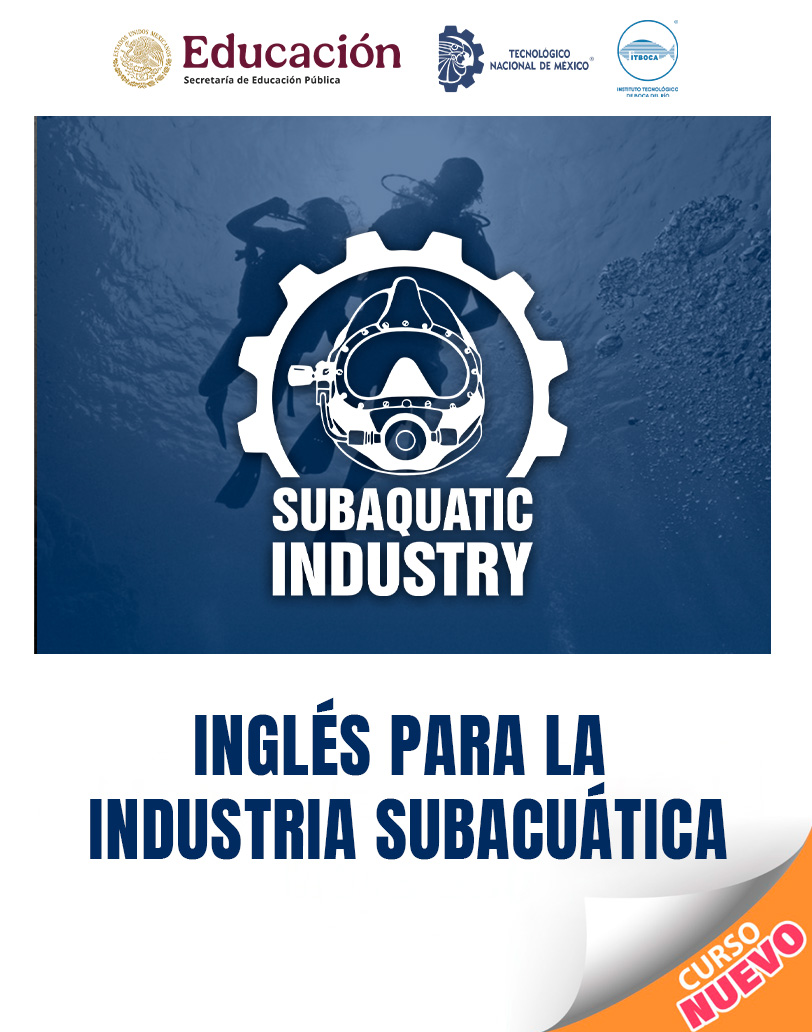
This course covers topics related to careers and professions.
Course duration
6 weeks, 30 total hours.
¿What will you learn?
The industries related to industrial and recreational diving.
The connection between naval engineering and the underwater industry, including vocabulary and processes specific to offshore professions.
How tourism benefits from industrial and recreational diving using English as a communication tool, adding competitive value for English-speaking visitors.
The interaction within the marine ecosystem, as well as the processes to identify species and their relationship with aquatic habitats.
Some of the fundamental processes for activities and safety in industrial and recreational diving, including the use of SCUBA gear and surface-supplied equipment.
This course is organize by modules, with the following topics:
Module1: Introduction to Subaquatic Industry
1.1 What about the naval industry around the world?
1.2 Why tourism is important for the subaquatic industry?
1.3 Marine Biology and Ecosystem interaction
1.4 Let's begin with diving
Module 2: Tourism and Subaquatic Industry
2.1 Let's learn some vocabulary
2.2 Sustainable tourism to the subaquatic industry
2.3 The importance of following the rules while snorkeling
2.4 Let´s go for an snorkeling xcursion
2.5 Diving experience and tourism
Module 3: Naval and Offshore Nomenclature
3.1 Naval Industry
3.2 Parts of the Ship
3.3 Ship Structure
3.4 Offshore Industry
Module 4: Marine Biology
4.1 Vocabulary
4.2 Let's learn about Marine Enviroment
4.3 Marine communities : Plankton, Nekton y Benthos
4.4 Coral System and environment requirements
4.5 Types of Coral Reef
Module 5: Scuba Diving
5.1 Vocabulary
5.2 Basic Diving Equipment
5.3 SCUBA Equipment
5.4 Human Physiology of underwater diving
5.5 Subaquatic and physical phenomen
Module 6: Commercial Diving
6.1 Useful Vocabulary
6.2 Principles of operation in diving
6.3 Basic equipment
6.4 Safety Maneuvers while diving
6.5 Surface Decompression with Oxygen
Each module includes activities like, listen and repeat, grammar practice, writing, answering questions, videos, interviews with experts and reading comprehension, and also the quiz that will measure up your advance.
Improve your language skills in the subaquatic industry with this quality course, wich provide the tool to succeed in this globalized world.
Requirements
Minimum English language knowledge at B1 level (CEFR)
Participating Institutions
TecNM is a higher education institution with a presence in all 32 Mexican states through its 254 institutes, units, and centers. Its mission is to comprehensively train competitive professionals in science, technology,and other areas of knowledge, committed to the country's economic, social, and cultural development and sustainability.
Link: TecNM campus Boca del Río